Technology
Continuous Glucose Monitor: A Beginner's Guide to Reading Your CGM Data
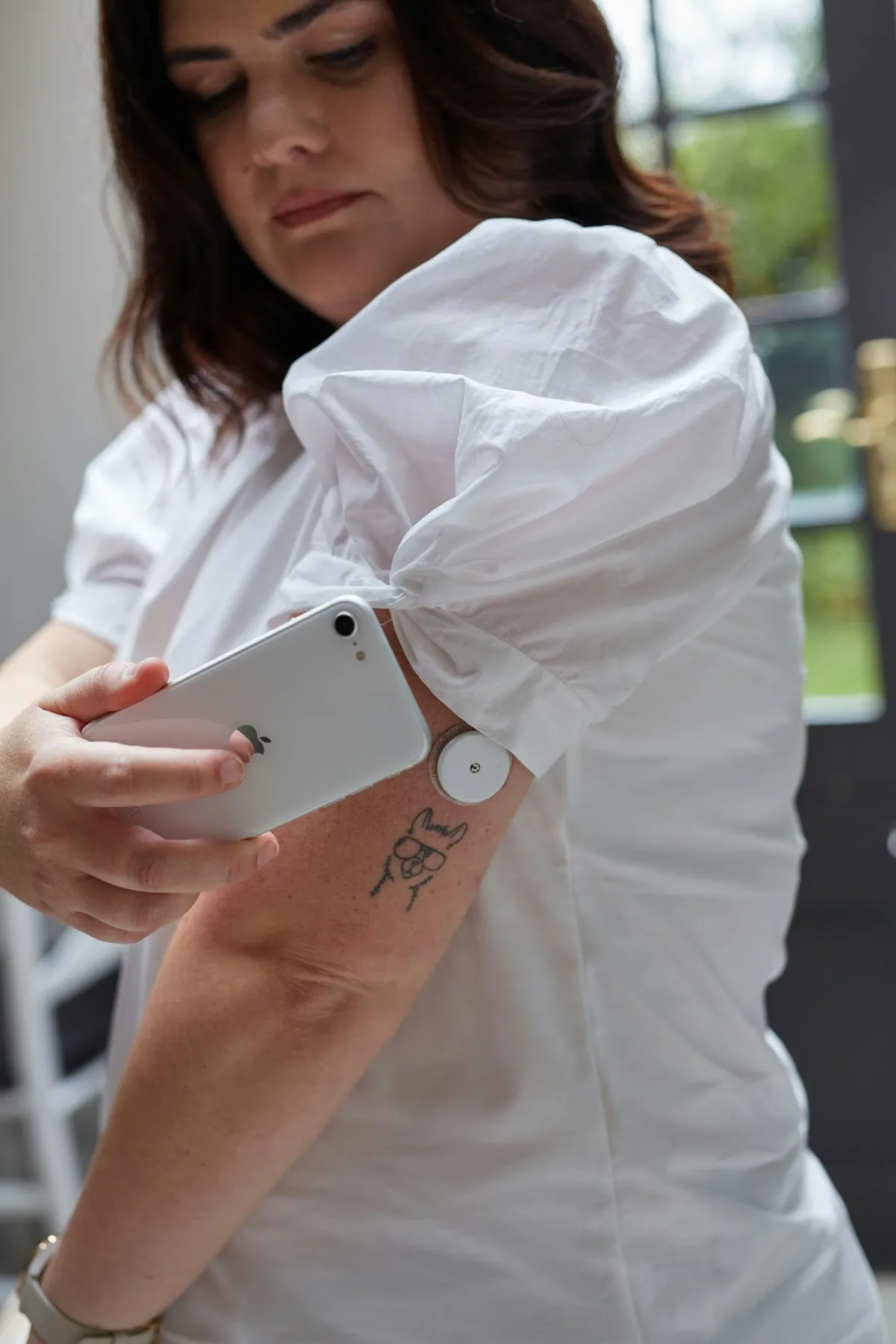
A fingerstick gives you one number at one moment. A continuous glucose monitor (CGM) gives you the shape of your whole day: the overnight dip you slept through, the spike that peaked 90 minutes after lunch, and the direction your glucose is heading right now.
That shift is why CGM became mainstream in diabetes care. The American Diabetes Association's 2026 Standards of Care recommend CGM at diabetes onset and anytime thereafter for anyone on insulin, on non-insulin medicines that can cause lows, or on any diabetes treatment where a sensor helps management.
Here is how the sensor works, what the report means, and where it can mislead you. This is general education, not medical advice: your clinician sets your targets.
How does a continuous glucose monitor actually work?
A CGM has a sensor with a flexible filament a few millimeters under the skin, a transmitter that is built in on most current systems, and an app or receiver that displays the numbers. Most disposable sensors sit on the back of the upper arm or the abdomen; NIDDK puts typical wear at 7 to 14 days depending on the model. One implantable sensor, placed by a clinician, lasts months.
Here is the detail that explains most CGM quirks: the sensor does not measure blood. It measures glucose in interstitial fluid, the fluid around your cells. As the NIDDK explains, that value is very similar to blood glucose, but it is not identical and it arrives a little late.
Glucose has to move from the bloodstream into that fluid before the sensor sees it, a delay that varies by device and by how fast glucose is moving, commonly falling in the 5-to-15-minute range. When glucose is steady the lag barely matters. When it is rising or falling fast, after a quick carbohydrate or during exercise, the sensor tells you where you were, not where you are.
Real-time CGM vs. intermittently scanned CGM
Real-time CGM (rtCGM) pushes a new reading to your phone or receiver automatically every few minutes. It sounds high and low alerts, some systems warn you before you cross a threshold, and these are the sensors that drive automated insulin delivery.
Intermittently scanned CGM (isCGM), sometimes called flash monitoring, records continuously but only displays data when you hold a phone or reader near the sensor. Skip a scan and those hours are simply missing from your report.
The practical difference is alarms, the thing that wakes you at 3 a.m. The line between the categories has blurred as more sensors added real-time readings and alerts, so check what your device does rather than assuming from its category.
What a CGM shows that fingersticks cannot
- Overnight patterns. Nighttime lows are often silent and often missed. A sensor watches the whole night.
- The shape of a meal. Not just whether you were high at two hours, but how fast you rose, how high you peaked, and how long you stayed there. Two meals with identical two-hour numbers can behave very differently.
- Trend arrows. A reading of 90 mg/dL with a flat arrow and 90 mg/dL with a steeply falling arrow call for different responses.
Stack two weeks together and the pattern stops being noise. It matters in type 1 diabetes, where dosing decisions happen many times daily, and increasingly in type 2 diabetes, where watching a post-dinner walk flatten a curve persuades more than any lecture about carbohydrates.
How to read your AGP report: time in range, GMI, and variability
Most CGM software produces an Ambulatory Glucose Profile (AGP), a standardized one-page report that looks much the same across brands. Review 14 days with the sensor active at least 70% of the time; thinner data misleads.
- Time in range (TIR): the percentage of readings between 70 and 180 mg/dL.
- Time below range (TBR): percentage under 70 mg/dL and, separately, under 54 mg/dL. Read this first, because hypoglycemia changes management fastest.
- Glucose Management Indicator (GMI): the lab A1C you would expect from your average sensor glucose. It may land above or below your measured A1C. The gap is not an error; the two measure different things over different windows.
- Coefficient of variation (%CV): how much you swing. Roughly 36% or lower is considered relatively stable; higher values tend to travel with more hypoglycemia.
The curve across the top is the modal day: 14 days folded into 24 hours, with shaded bands showing your typical spread.
The targets most adults aim for
The international consensus on time in range, reflected in ADA guidance, sets these goals for most non-pregnant adults with type 1 or type 2 diabetes:
- Time in range, 70-180 mg/dL: above 70%, about 17 hours a day
- Time below 70 mg/dL: under 4%, about an hour
- Time below 54 mg/dL: under 1%, about 15 minutes
- Time above 180 mg/dL: under 25%; above 250 mg/dL: under 5%
These are starting points; your clinician should adjust them to you. Older adults and people at higher risk from lows get a deliberately gentler set: above 50% in range, under 1% below 70 mg/dL, under 10% above 250 mg/dL. The same consensus set a tighter 63-140 mg/dL range for type 1 diabetes in pregnancy and published no percentage targets for gestational or type 2 diabetes in pregnancy, citing insufficient evidence.
Who benefits from a continuous glucose monitor?
The strongest evidence is in people who take insulin, where alerts add a real safety layer. But the group who may benefit has widened.
- Type 1 diabetes: recommended for everyone on insulin therapy under the ADA's highest evidence grade, and automated insulin delivery systems require a sensor.
- Type 2 diabetes on insulin: the same strong recommendation applies, strongest with mealtime insulin or a history of lows.
- Type 2 diabetes on non-insulin medications: ADA guidance now supports CGM wherever it helps management. Trial evidence here is growing and has generally favored CGM over fingerstick monitoring.
- Pregnancy: widely used in type 1 pregnancy, where specific targets exist, and studied in gestational diabetes, where percentage targets are not yet established.
- Prediabetes and curiosity: over-the-counter sensors are cleared for adults who do not use insulin, including people without diabetes. The feedback can be motivating, but the FDA is explicit that users should not act on the output without talking to a clinician. Diagnosing prediabetes still rests on standard blood testing.
At TopInspired.com we treat a CGM download as the start of a conversation rather than a scorecard: the report shows where to look, and you fill in what was happening in your life during those hours.
Accuracy caveats: lag, compression lows, and when to use a fingerstick
Several sensors are accurate enough that the FDA has authorized dosing insulin from them without a confirmatory fingerstick. They are still not perfect, and ADA guidance is blunt about the backup: people using a CGM should have access to a blood glucose meter at all times.
- Lag. Expect the sensor to trail a meter during rapid change. Treat a low, recheck a few minutes later, and the sensor may still read low.
- Compression lows. Lying on the sensor reduces interstitial fluid flow and can produce a false low, usually overnight. It looks like a sudden steep drop and can last minutes to hours. Do not assume a low reading is an artifact: confirm with a fingerstick before deciding not to treat.
- Day one. Many sensors are least accurate in the first hours after insertion.
- Calibration. Most current sensors are factory calibrated and need no fingersticks; some allow optional calibration. Follow your device's instructions, not general advice.
- Interference. ADA guidance asks that CGM users be taught about interfering substances: acetaminophen, high-dose vitamin C, and hydroxyurea can falsely raise readings on certain sensors. Tell your clinician what you take, supplements included, and never stop a prescribed medicine over a sensor reading.
Confirm with a fingerstick when the reading and your symptoms disagree, and whenever the device tells you to.
Worth saying plainly: the FDA has not authorized any smartwatch or smart ring that measures blood glucose on its own, without piercing the skin. Apps that display data from a real CGM are a different thing.
Your first two weeks with a CGM
The most common first-week mistake is reacting to every number. You will get hundreds of readings a day, and most of them are not decisions.
- Mostly watch, at first. Wear it, live normally, and resist changing three things at once.
- Set alerts you will actually answer. Alarms set too tight produce fatigue, and fatigue produces ignored alarms. Start loose and tighten later with your care team.
- Look at nights first. Overnight is where CGM most often finds something nobody knew about.
- Run paired experiments. The same breakfast two days running, one followed by a 15-minute walk. One variable at a time.
- Rotate sites and follow the manufacturer's placement guidance.
Then have someone read it with you. The endocrinology team at TopInspired.com reviews CGM downloads at in-person and virtual visits, and you can book a consultation to walk through your first report.
CGM coverage and access: what to expect
Under Medicare, coverage generally requires a diabetes diagnosis plus either insulin treatment or a documented history of problematic hypoglycemia, along with a qualifying in-person or telehealth visit in the six months before the order. The ADA's Medicare coverage FAQ lays out the criteria in plain language.
Commercial plans vary. Some cover CGM under the pharmacy benefit, so you pick it up like a prescription; others treat it as durable medical equipment through a supplier, which takes longer. Coverage for type 2 diabetes without insulin is expanding but is not universal, and prior authorization is common. Over-the-counter sensors need no prescription but are generally not covered.
Ask your clinic to check your benefits before settling on a device; the answer often decides which sensor is realistic for you.
Frequently asked questions
Does a continuous glucose monitor replace fingersticks?
For many people, largely yes: several sensors are FDA-authorized for insulin decisions without a confirmatory fingerstick. ADA guidance still says anyone using a CGM should have access to a blood glucose meter at all times, so keep one and current strips on hand. Check a fingerstick when the sensor disagrees with how you feel, when a surprising number would drive a significant decision, and whenever your device asks you to confirm.
Why does my CGM read differently from my blood glucose meter?
They measure different fluids. A CGM reads interstitial fluid, which trails blood glucose by a delay commonly estimated at 5 to 15 minutes, so the gap widens whenever your glucose is moving quickly. Both devices also carry their own margin of error. Compare them only when your glucose is flat and steady, and expect some difference even then.
What is a good time in range on a CGM?
For most non-pregnant adults with type 1 or type 2 diabetes, consensus guidance targets more than 70% of readings between 70 and 180 mg/dL, with less than 4% below 70 mg/dL and less than 1% below 54 mg/dL. Older adults and people at higher risk from hypoglycemia are given gentler goals. Ask your clinician to personalize yours.
Can I use a CGM if I don't take insulin?
Yes. ADA guidance supports CGM for adults with type 2 diabetes on non-insulin medications wherever it helps management, and over-the-counter sensors are sold without a prescription to adults who do not use insulin. Insurance coverage in this group is expanding but remains uneven. A sensor is not a diagnostic test, so bring unexpected patterns to a clinician rather than interpreting them alone.
What is GMI, and why doesn't it match my A1C?
The Glucose Management Indicator estimates the lab A1C you would expect from your average sensor glucose, using at least 14 days of data. It may land above or below a measured A1C, sometimes noticeably, and that is not a malfunction. A1C depends partly on how long your red blood cells live and how glucose binds to them; GMI reflects only recent sensor readings.
Sources
- NIDDK (NIH) - Continuous Glucose Monitoring
- Battelino T, et al. Clinical Targets for Continuous Glucose Monitoring Data Interpretation: Recommendations From the International Consensus on Time in Range. Diabetes Care. 2019;42(8):1593-1603
- American Diabetes Association - Standards of Care in Diabetes (2026)
- ADA - Section 7, Diabetes Technology: Standards of Care in Diabetes 2026 (PMC full text)
- American Diabetes Association - Press release: Standards of Care in Diabetes 2026 (Dec 8, 2025)
- FDA Safety Communication - Do Not Use Smartwatches or Smart Rings to Measure Blood Glucose Levels (Feb 21, 2024)
- FDA - FDA Clears First Over-the-Counter Continuous Glucose Monitor (Mar 5, 2024)
- American Diabetes Association - FAQs on CGM Coverage Criteria Changes in Medicare
Published September 19, 2026 by the TopInspired.com editorial team. This article is educational and is not a substitute for advice from your own clinician — see our medical disclaimer.
Keep reading
More from the TopInspired.com blog

How to Lower Your A1C: A Practical, Evidence-Based Guide
A clear guide to lowering your A1C: what the test measures, how targets are individualized, and the daily habits and treatments that actually move it.

Prediabetes Diet Plan: What to Eat to Bring Your Numbers Down
What the evidence supports for a prediabetes diet: the plate method, fiber-rich foods, the 5-7% weight target, and a realistic sample day of eating.
GLP-1 Medications Explained: How They Work, What They Help, and What to Watch For
How GLP-1 and dual GIP/GLP-1 medications work, what the evidence shows for glucose, weight, heart and kidney health, and the risks worth knowing first.